It’s 7pm and they’re stuck. Now what?
A tutor that teaches. Never just answers.
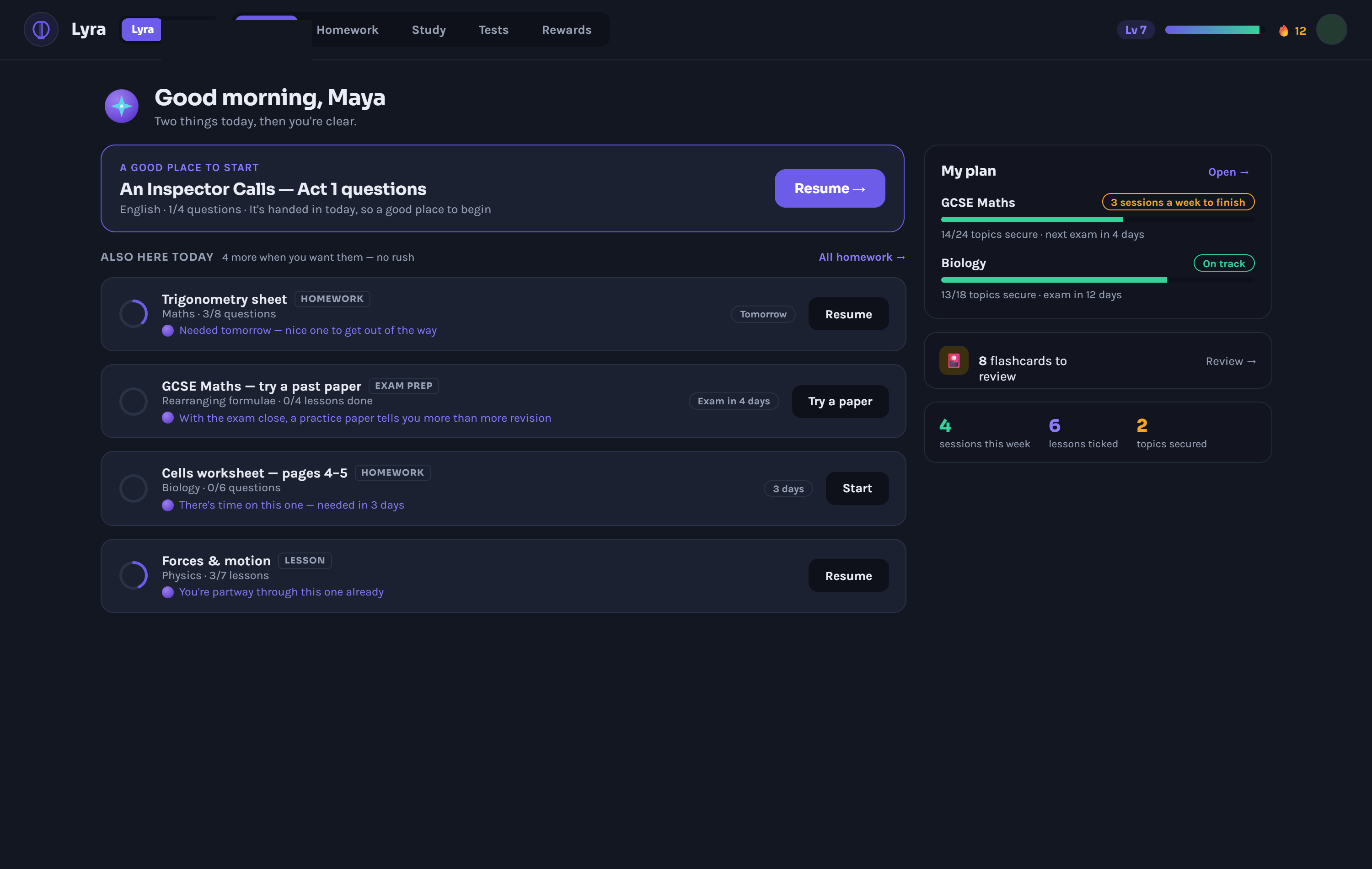
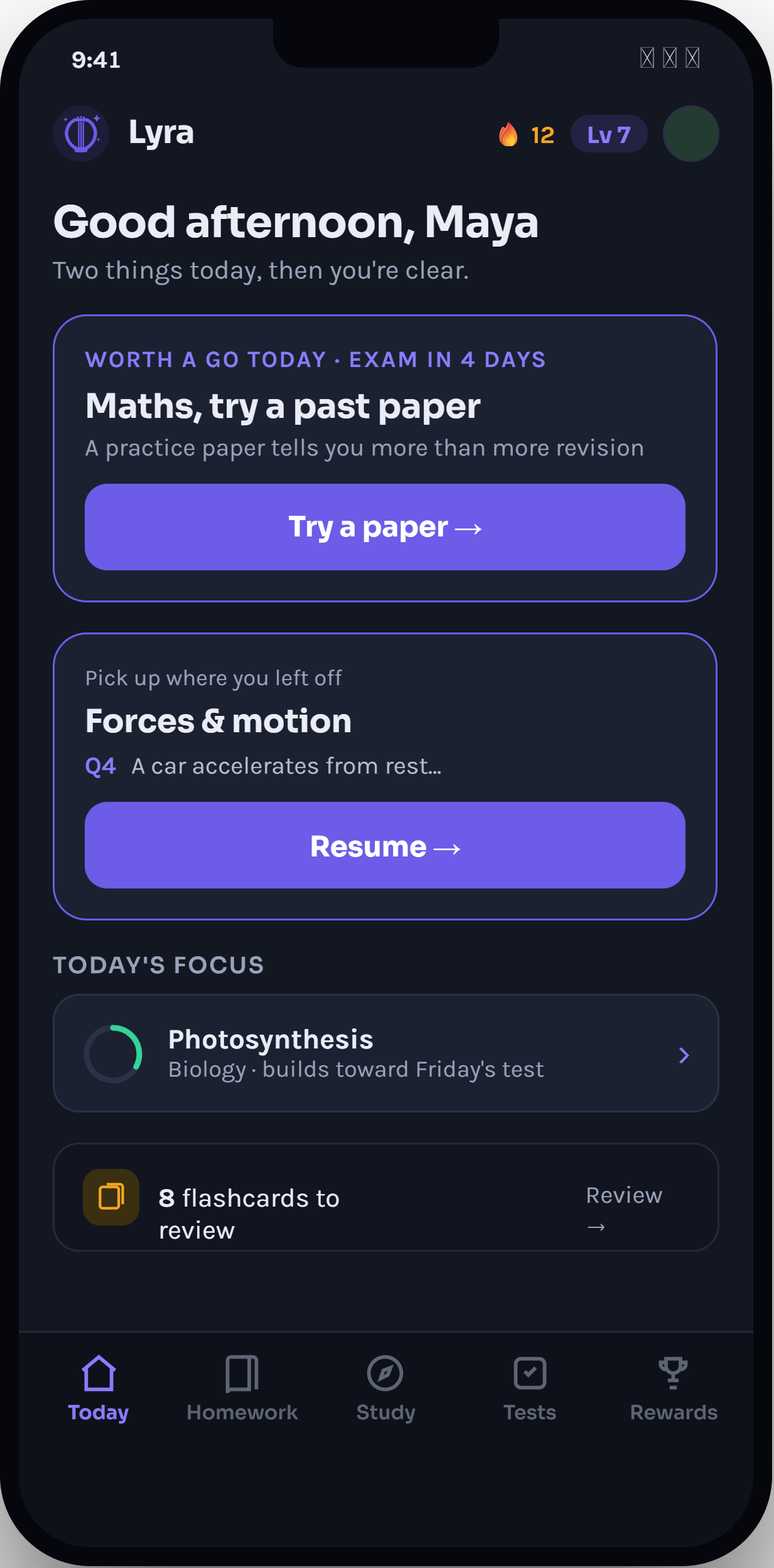
A personal tutor for Years 3 to 11, at the kitchen table whenever homework goes wrong. Grounded in Oak National Academy lessons and the UK national curriculum, it teaches the method your child’s school uses and works through the problem with them instead of handing over the answer.
Free in beta · phone, tablet and laptop · no card needed
Now what
Three minutes, and they are working
1Add your child
First name and school year. That is what picks their tutor and their curriculum, so there is nothing to configure.
2Start with whatever tonight needs
Photograph a homework sheet, pick a topic to learn, build a course for the term, or sit a practice paper. All four are there from the first evening.
3Walk away
You are not needed for the lesson. Progress, marking and the tutor’s notes are in your dashboard whenever you want them, with a summary on Sunday and a message if anything needs you sooner.
What it actually does
Five things it does, every evening, without you sitting in
A private tutor is expensive, and whatever they cover is confined to that one hour a week. TutorLumi is there at 7pm on a Tuesday when the worksheet makes no sense, and it teaches the method their school teaches.
It teaches the curriculum your child is actually being taught
Every lesson is built on the UK national curriculum and grounded in Oak National Academy content, the material a great many schools teach from. The method matches, the vocabulary matches, and nothing learned here has to be unlearned on Monday.
- Pitched to the key stage they are in, not to a generic level
- Lessons come in units, so one topic tonight can become a course for the term or the year
- Remembers what they found hard last week and starts the next lesson there
- Speaks as well as types, so a struggling reader is not shut out
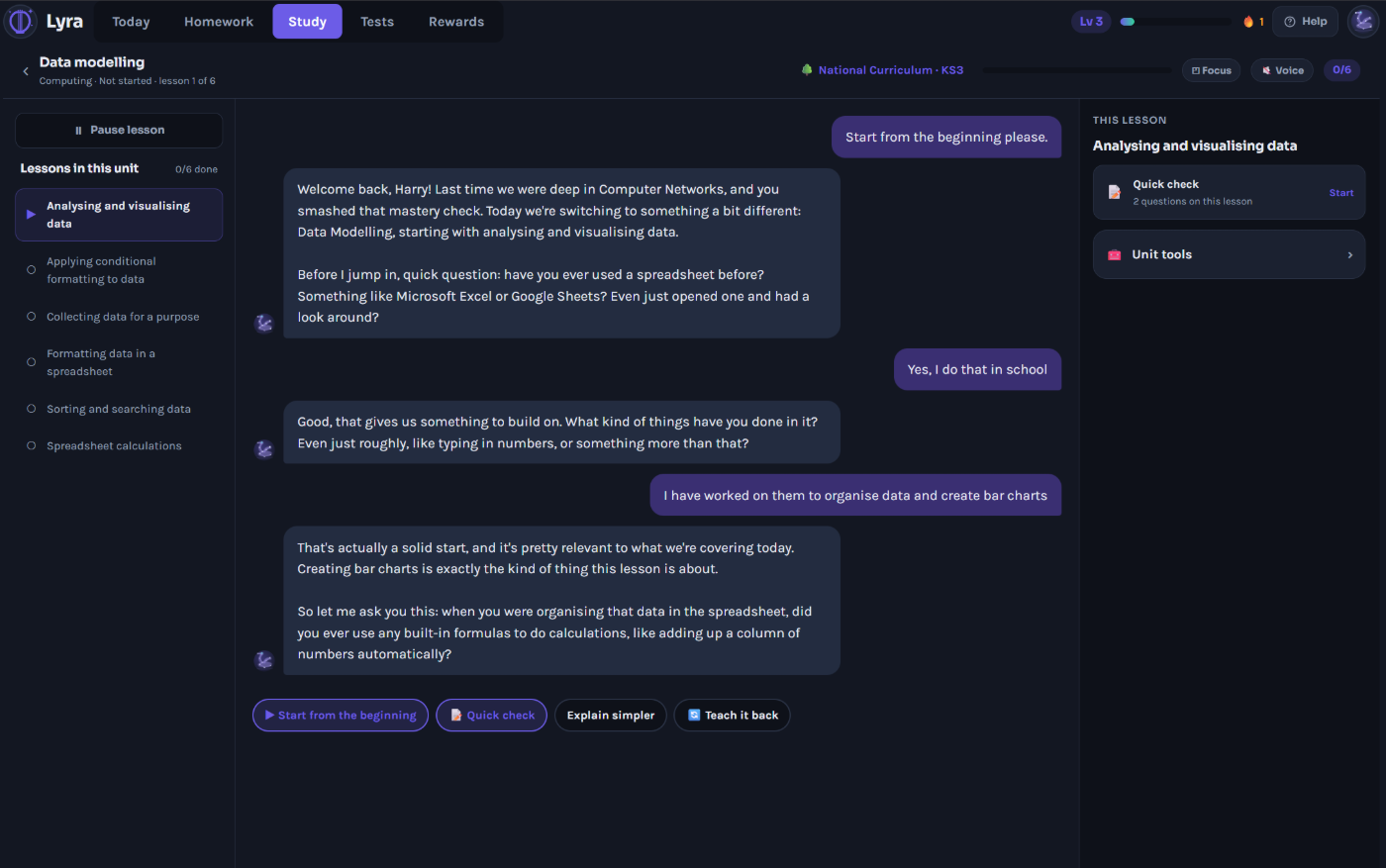
Warmer, slower, shorter sittings, and plenty of praise. No exam talk at all, because there is nothing to revise for yet.
Composed and direct, works to real exam dates, and marks a paper the way an examiner would.
Both are included, and your child gets the one for their year. When they start Year 7 the handover happens by itself in September: same account, same history, a tutor that talks to them differently.
Snap or upload your homework. Work through it together.
A photo of the page, a screenshot of the online version, or a file. TutorLumi reads every question, table and diagram, then teaches one question at a time and hands the real question back for your child to answer.
- Photos, screenshots and PDFs, as many pages as the homework runs to
- A question ticks off only when your child has genuinely done it
- It will not simply give the answer, however the question is put
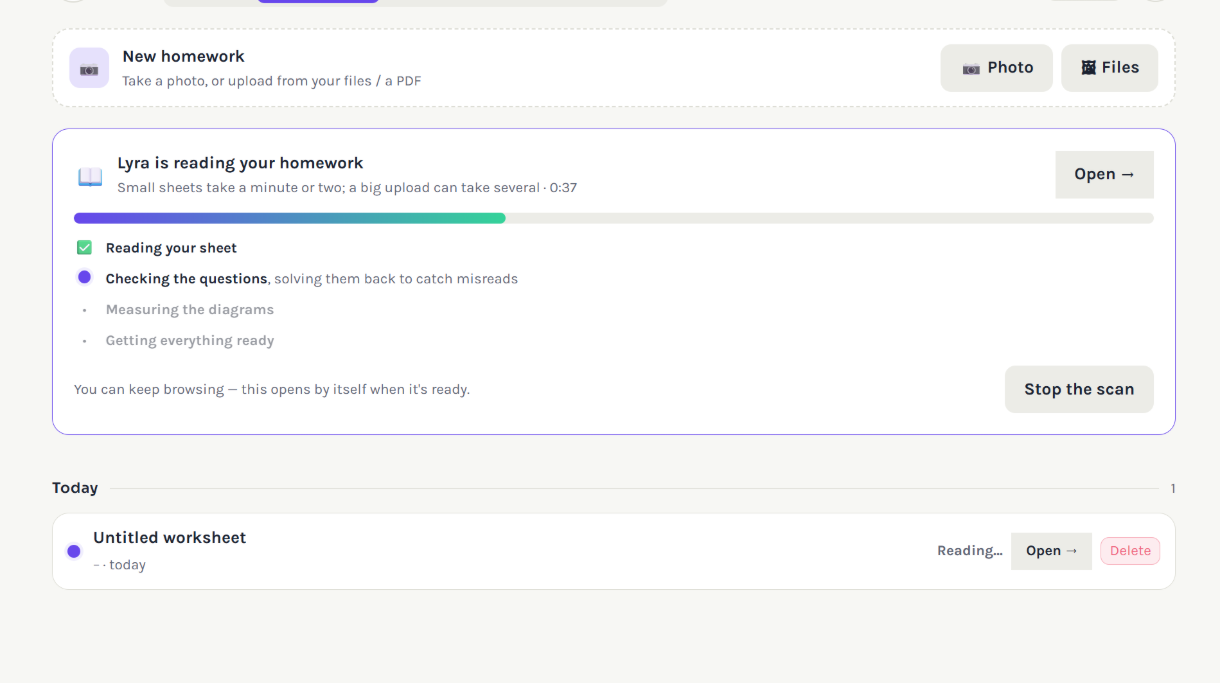
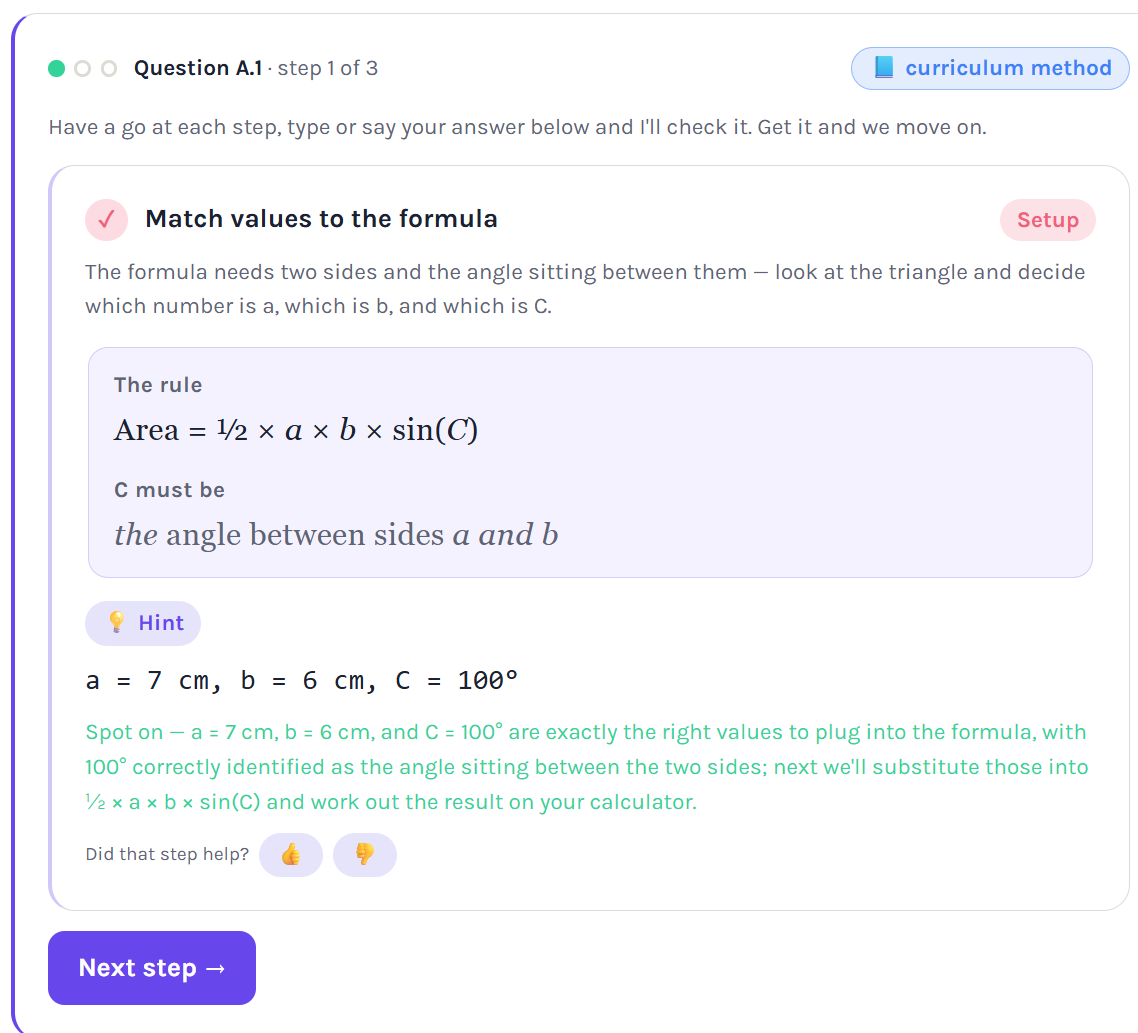
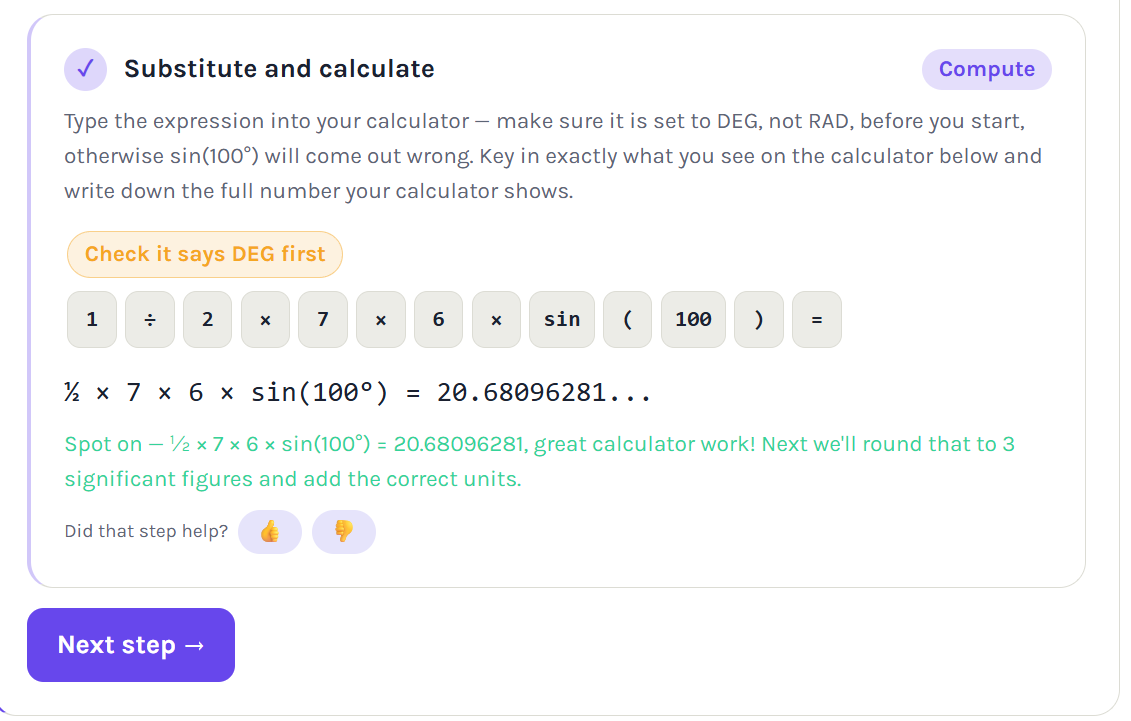
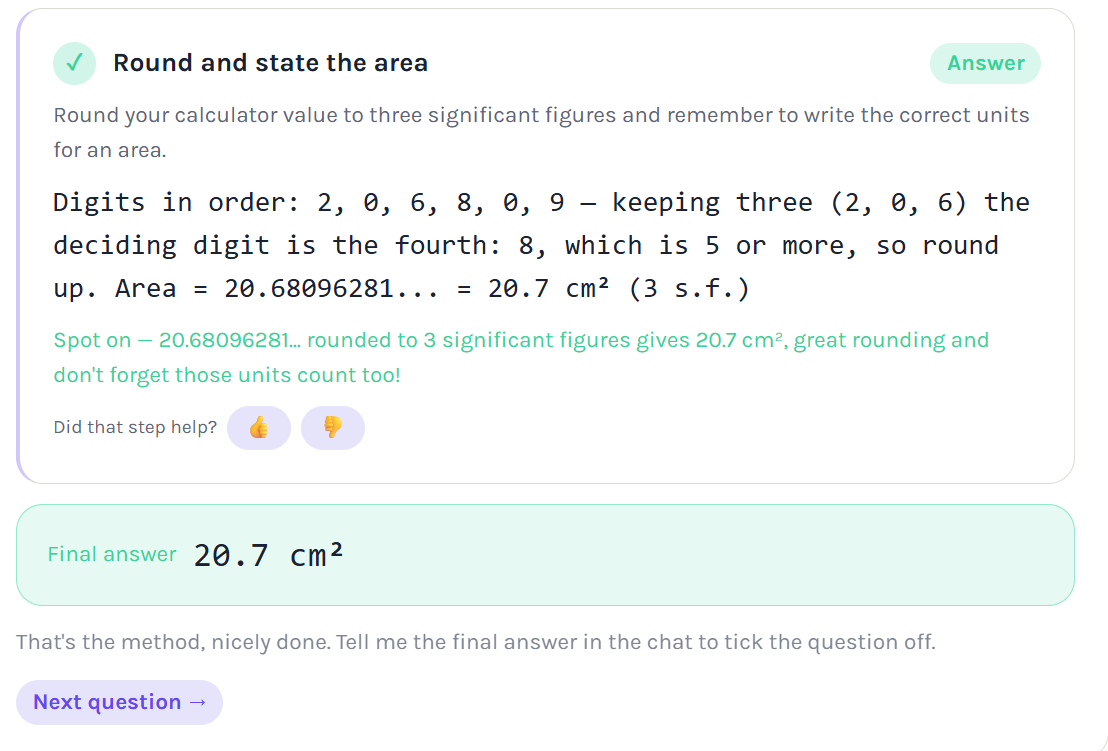
A photo, a screenshot or a PDF. It reads the questions, then solves them back to itself to catch a misread, and measures anything drawn. Your child can keep browsing while it works.
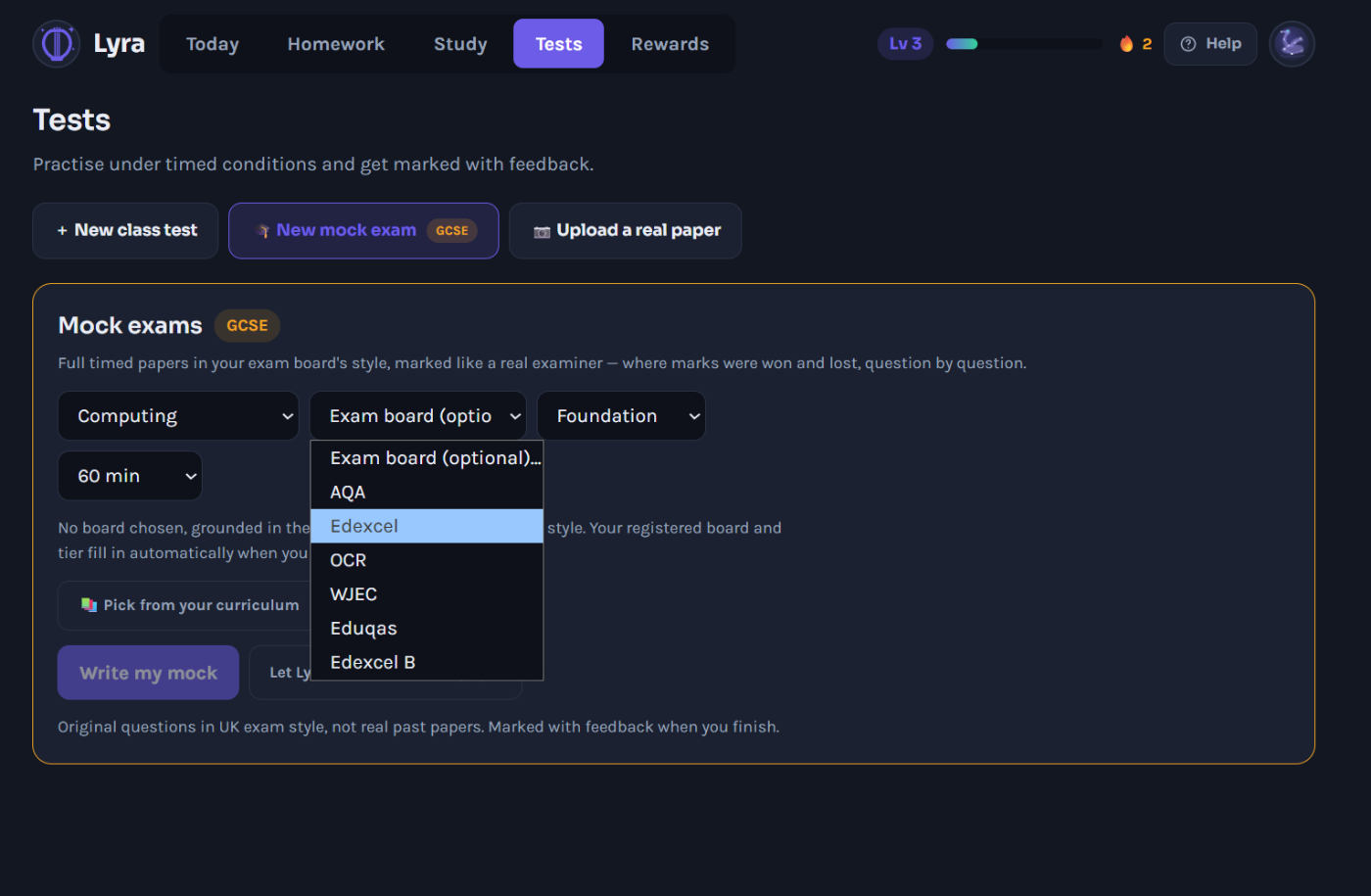
GCSE papers in your board’s style, marked like an examiner
For GCSE years TutorLumi writes papers in the style of the recognised boards, AQA, Edexcel, OCR and the rest, at the tier your child sits. For every year below, it writes a test on what they have actually been learning at school.
- Sit it under exam conditions, or with help on a single question when they are stuck
- Marks per question with the reason why, so a method mark survives an arithmetic slip
- Upload a real school paper and have that marked instead
See what matters, and ask the tutor about it face to face
Progress, strengths and where they are stuck, without reading over their shoulder. Then thirty minutes a week to talk it through with the tutor: not a report to decode, a conversation, the way you would talk to a teacher.
- A Sunday digest: what was done, what moved, and where the gaps are
- Your microphone only, no camera, and the tutor knows only their own lessons
- Safety alerts if something needs you, and a daily cap with a gentle cut-off
- You never read their private chat, and your child is told what you can see

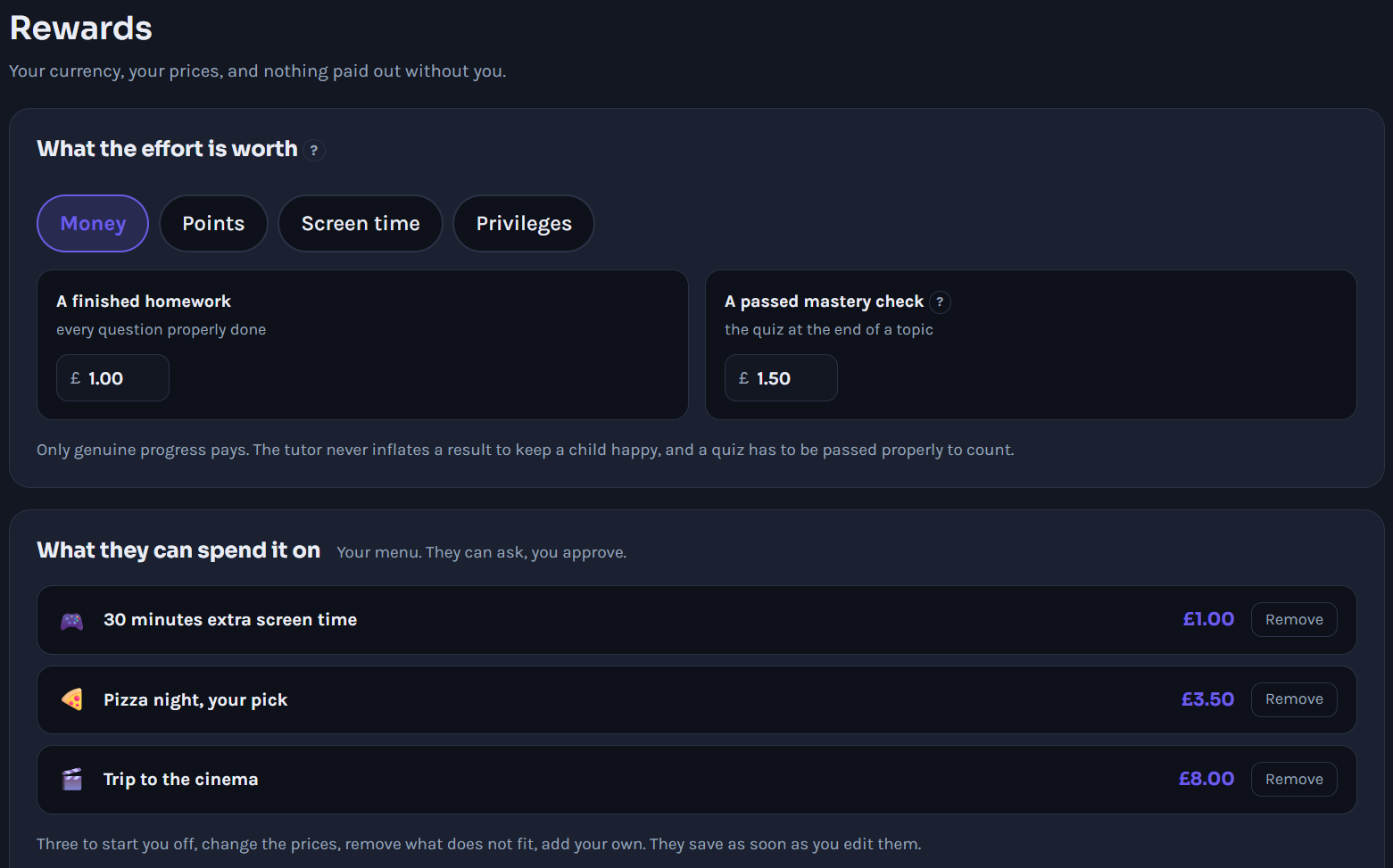
You decide what the effort is worth
Most children will do a lesson for a reward they chose with you. So the reward menu is yours: pick the currency, price the work, and approve every payout. Pocket money, screen time, a pizza night, a trip.
- Your currency. Money, points, screen time or privileges
- You price the work. A finished homework, a mastered topic, a full week
- Earned, not given. Only real progress pays, and it is never inflated
- You approve every claim, and rewards can be switched off entirely
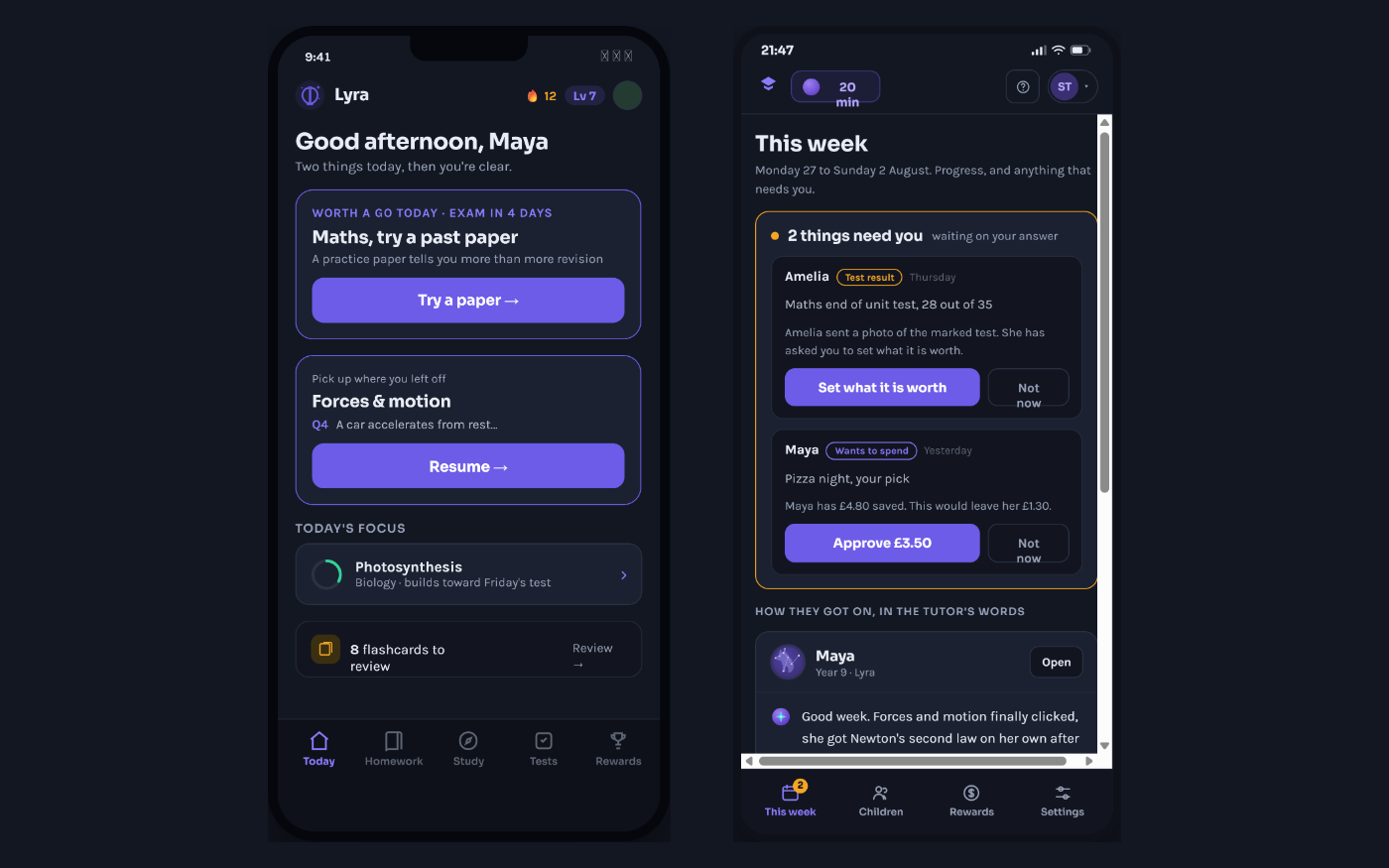
Phone, tablet or laptop, with nothing to install
Everything works the same on a phone, a tablet, a laptop or a desktop, for you and for your child. Nothing to install and nothing to keep updated: you both sign in wherever you happen to be, and pick up exactly where you left off.
The obvious worry
“Won’t they just use it to cheat?”
It is the first thing most parents ask, and it is the right question. Handing a child something that produces finished homework on demand does not help them, so the product is built so that it cannot.
Ask outright for the answer and you get a question instead. Your child types the working, and the tutor checks it. Nothing appears on the page that they did not produce.
In a practice paper they decide, question by question, whether to work one through with the tutor. Anything they had help with is flagged on the marking, so a score you are shown is honest about how it was reached.
A quiz has to be passed properly to count, and the tutor will not inflate a result to keep a child happy. If a topic is not secure, your dashboard says so.
Safety
Built for children first, and cleverness second
The tutor teaches from curriculum material. It does not browse, it does not generate images, and it keeps the conversation on learning.
No other children, no messaging, no sharing, and no advertising of any kind. There is nothing in the app that is not their tutor.
What they learned and where they are stuck, not a word-for-word log. Your child is told exactly what you can see, so nothing is done behind their back.
Automated checks watch for signs of distress or harm, and the tutor responds calmly in the moment. Most concerns are emailed to you, and every child is told plainly who gets told what.
UK hosted, GDPR compliant, never sold, and never used to train anyone else’s models. Read the detail.
Pricing
Free while we’re in beta
Both tutors, every feature, the whole family. Paid plans come later, with prices confirmed nearer the time. Beta families hear first, and nobody is charged without being asked.